Creating and leading IRAKERE, making history as the most momentous band in Afro-Cuban jazz and one of the most renowned in Latin jazz of all time, would have been enough for CHUCHO VALDÉS to be considered an essential and outstanding name in the history of Cuban music and jazz.
Valdés, however, did and continues to do much more: 94 albums as a lead artist; over 295 original compositions; 15 Grammy Awards (7 of them Latin Grammys) and 28 nominations (12 of them Latin Grammys); an Honorary Doctorate from the Berklee College of Music; the Musical Excellence Award from the Latin Recording Academy and his induction into the Latin Songwriters Hall of Fame; and the Leonard Bernstein Award granted by the Longy School of Music. These are recognitions that endorse his exceptional musical trajectory as a pianist, composer, bandleader, arranger, and one of the most influential musicians in the global jazz landscape.
The NEA Jazz Masters Fellowship, the highest honor bestowed upon jazz musicians in the U.S., does justice to and crowns a triumphant career of over 60 years devoted entirely to music.
His personal style is deeply rooted in the Afro-Cuban musical tradition, which he innovatively intertwines with jazz, classical music, and rock, always from an endless perspective of search and experimentation.
Music was a part of Dionisio Jesús “Chucho” Valdés Rodríguez’s life from the moment he was born in Quivicán, Havana province, Cuba, on October 9, 1941. His mother, Pilar, recalls that by age three, Valdés was already playing on the piano—with both hands and in any key—sketches of the melodies he heard on the radio. His father, the pianist, composer, arranger, and orchestra conductor Ramón “Bebo” Valdés, was his first teacher. Both parents noticed young Chucho’s precocious talent, and by age 5, he was already taking lessons in piano, music theory, and solfeggio.
As a teenager, Chucho entered the Havana Municipal Conservatory of Music, graduating at 14. A year later, in an informal setting, he formed his first jazz trio. In 1959, at just 18 years old, his father had him make his professional debut with the jazz band Sabor de Cuba, the orchestra he had created and directed.
Live concerts and recordings with his father’s orchestra were not enough for the restless Chucho, whose experimentation in jazz was growing endlessly. In 1961, he could be seen playing at the legendary Elegante bar in Havana’s Hotel Riviera as the pianist for Rolando Estrella’s group; between 1963 and 1967, he was the pianist for the Havana Musical Theater orchestra. Concurrently, with several notable and close instrumentalists, he created “Jesús Valdés y su combo” in 1964, recording his first album that same year: Jazz Nocturno (Areíto/Palma). With the legendary Amado Borcelá Guapachá, he recorded the album Guapachá en La Habana (Areíto) in 1965.
In Cuba, following the severing of relations with the United States in 1961, jazz became a political instrument. While the government line treaded paths already surpassed in the development of this genre, Valdés refused to abandon his experimental approaches in small formats under more avant-garde influences. Although he had to accept joining the Orquesta Cubana de Música Moderna in 1967 as a pianist—an official big band that avoided mentioning the word “jazz” in its name—he concurrently continued with his musical “heresies.”
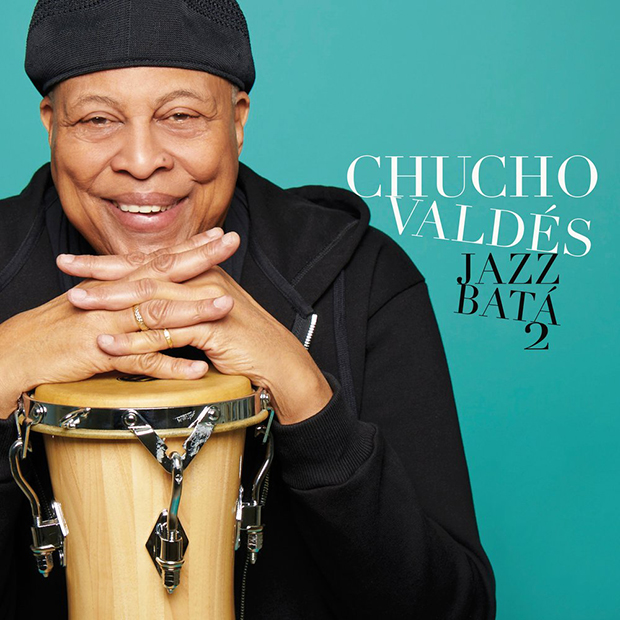
Chucho Valdés’s innovative vocation reached a remarkable moment in the album Jazz Batá (Areíto, 1972) where, in a trio format, the piano, bass, and Afro-Cuban ritual percussion dialogued with jazz sonorities, marking the beginning of a new way of approaching Afro-Caribbean musical essences. This was a direct predecessor to Chucho Valdés’s greatest and most influential creation: the group Irakere (1973-2005), the jazz band that managed to redefine Latin jazz by fusing tradition, ancestry, and modernity.
Following their first performances in the United States in 1978 to present the album Irakere (Areíto/Columbia), Valdés and his band won their first Grammy in the Best Latin Recording category at the 1980 edition. A particular standout on this album is “Misa Negra,” a four-movement suite for jazz band, Afro-Cuban percussion, and voices, which was the first Afro-Cuban jazz suite created by Chucho Valdés.
Featuring 40 original albums, Chucho Valdés’s discography with Irakere garnered two more Grammy nominations for the albums Irakere 2 (Best Latin Recording in 1981) and Babalú Ayé (Best Latin Tropical Album in 1999).
Valdés never stopped experimenting, and although he remained with Irakere until 2005, he began a parallel career in 1998 as a soloist, leader of small ensembles, and participant in numerous collaborations. This was a fruitful period marked by albums such as Roy Hargrove’s Habana, an important joint album through which Valdés achieved his second Grammy Award; Solo Piano (Blue Note), Bele Bele en La Habana (Blue Note), Briyumba Palo Congo (Blue Note), and New Conceptions (Blue Note), all nominated for the Grammy for Best Latin Jazz Album; and Live at the Village Vanguard (Blue Note), which won the award in 2001.
In this context, Valdés sublimated the result of his extraordinary pianistic imagination and his dedication to constant experimentation. Notable are his collaborations with musicians as diverse as Roy Hargrove, Leo Brouwer, Pablo Milanés, Iván Lins, Paquito D’Rivera, Arturo Sandoval, Omara Portuondo, several symphony orchestras, and, more recently, Chick Corea and Eliane Elias, among others.
Valdés celebrated the 40th anniversary of Irakere’s birth with a world tour and a recording: Tribute to Irakere: Live at Marciac (Jazz Village/Comanche Music), which won the 2017 Grammy in the Best Latin Jazz Album category.
Forty-three years after conceiving the “Misa Negra” suite, one of his most innovative works, Valdés was inspired once again in 2021 by Yoruba rituality and its philosophical precepts about life to conceive another suite: La Creación, commissioned by the Adrienne Arsht Center for the Performing Arts, the Kennedy Center in Washington, D.C., the Chicago Symphony Center, and the Los Angeles Philharmonic Association. It premiered on November 5 of that year and was performed across the United States and Europe, including concerts at Jazz at Lincoln Center in New York; the Detroit Jazz Festival in Detroit, Michigan; the Monterey Jazz Festival in Monterey, California; the Philharmonie de Paris, and the Palau de la Música in Barcelona, Spain.
The year 2024 was special for Valdés: the Irakere 50 TOUR took place, bringing a musical reunion in Miami and Chicago with two musicians who were pillars of the founding Irakere: Paquito D’Rivera and Arturo Sandoval. For Valdés, these were two nights of reunion and deep emotion with men who are now also major names in jazz and whose paths had separated in the 1980s.
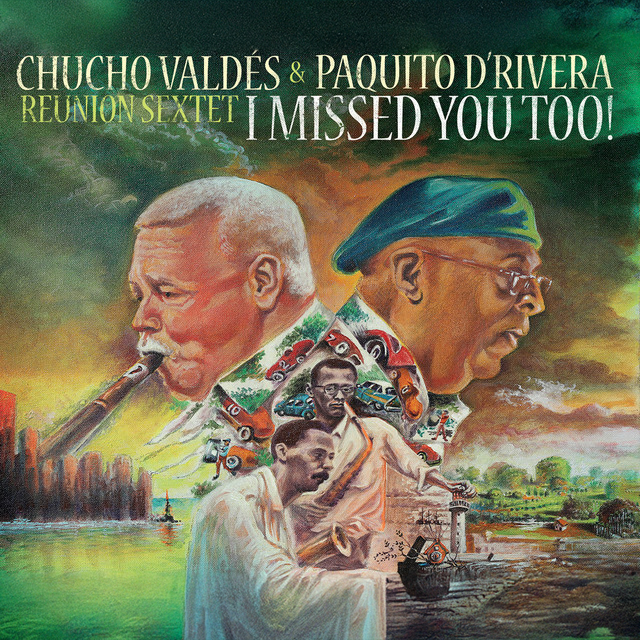
He had already reunited with D’Rivera, his old friend and musical accomplice, when in January 2022 they recorded the album I Missed You Too! (Paquito Records/Sunnyside) and embarked on a European and US tour with a sextet they named “Reunion,” winning the Latin Grammy for Best Latin Jazz/Jazz Album.
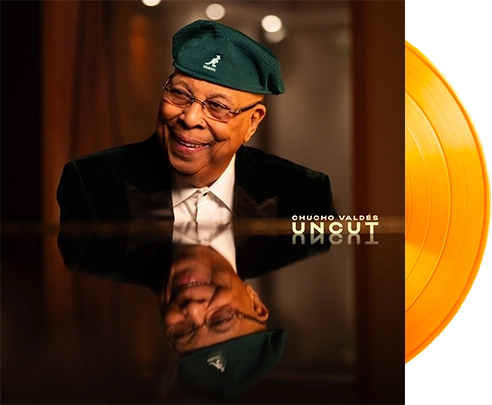
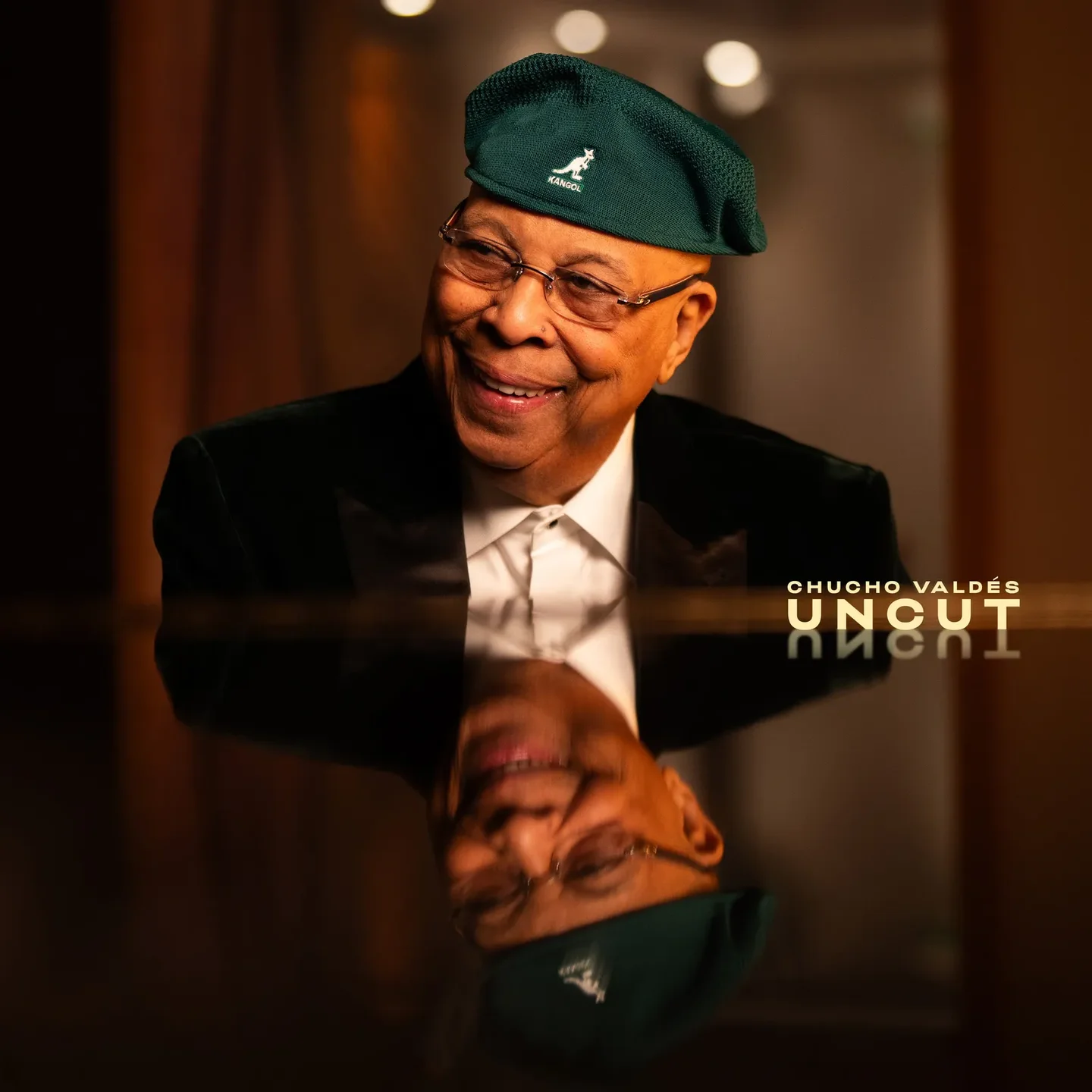
In 2024, he also recorded his most recent album, Cuba & Beyond (InnerCat Music Group), which commemorates the 60th anniversary of his recording debut. Cuba & Beyond is the reaffirmation of Valdés’s unstoppable creativity, setting contemporary standards in the work of another new and brilliant group under his leadership: the Royal Quartet, featuring Horacio “El Negro” Hernández (drums), José A. Gola (bass), and Roberto Vizcaíno Jr. (percussion).